
Table of Contents
ToggleThe Bandit is one of Clash Royale’s most electrifying rare cards, a sleek, aggressive unit that rewards aggressive plays and sharp positioning. Since her release, she’s become a cornerstone of countless deck archetypes, from midladder grinders to competitive ladder legends. Whether you’re climbing trophy ranges or testing meta strategies, understanding when and how to deploy Bandit can be the difference between a clutch three-crown victory and a devastating loss. In 2026, her role in the meta remains potent, especially with recent balance changes reshaping the way players approach her dash mechanics and elixir timing. This guide covers everything from her core mechanics to advanced positioning tricks that’ll elevate your Bandit gameplay.
Key Takeaways
- Bandit Clash Royale’s dash mechanic grants invincibility during the charge, allowing skilled players to dodge spells and create high-reward offensive plays across multiple deck archetypes.
- At just 3 elixir, Bandit cycles efficiently into control, beatdown, and cycle decks while serving as a reliable ground-target eliminator in the 2026 meta.
- Positioning is paramount to Bandit’s success—master the Glass Bridge Play, Kite and Dash, and Reactive Dash techniques to maximize value and separate your gameplay from casual players.
- Hard counters like Inferno Dragon, Mini P.E.K.K.A, and Valkyrie demand strategic awareness; focus on placement and timing rather than direct stat trades to overcome them.
- Bandit maintains a 52% win rate at ladder standard in early 2026, ranking in the upper-mid tier for rare cards and proving especially potent in control matchups and 2v2 play.
- Prioritize leveling Bandit if building Hog Rider or cycle decks as your primary strategy, with special attention to seasonal pass rewards for cost-efficient progression.
What Is Bandit and Why She Matters
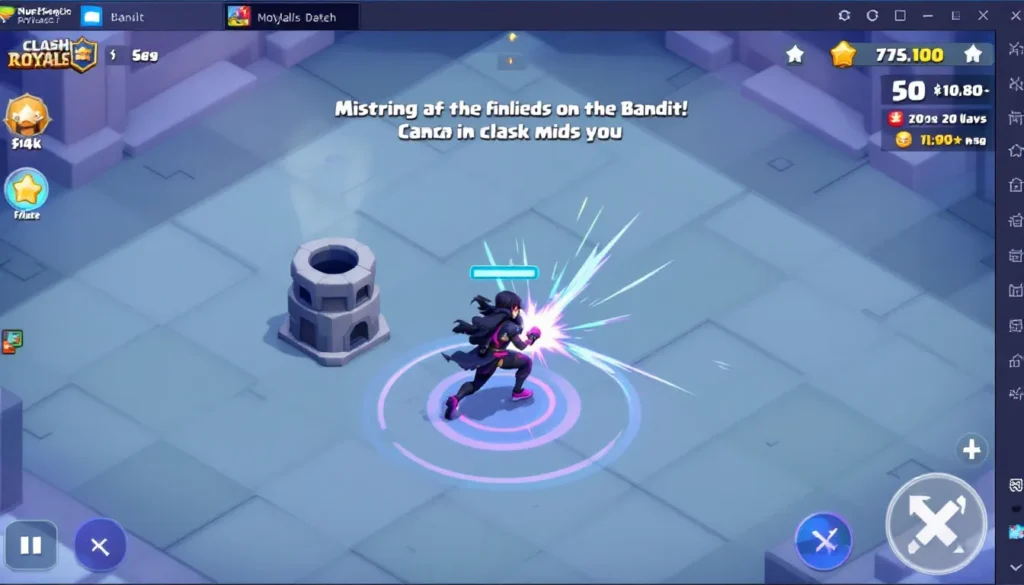
Bandit is a 3-elixir rare unit with a defining feature: her Dash ability lets her charge at the nearest enemy, becoming invincible during the dash and dealing damage on impact. She’s a glass-cannon skirmisher, fragile in direct extended fights but devastating when used tactically. Her success hinges entirely on positioning and timing.
Why does she matter in 2026? The meta has shifted toward control and cycle decks that prize efficient, single-target damage dealers. Bandit fills that role perfectly. She’s cheap enough to cycle back into rotation quickly, yet impactful enough to shut down threats like Hog Rider, Knight, or Musketeer with proper timing. Unlike heavy tanks or splash-damage units, she rewards game sense and awareness.
In competitive play, Bandit sees consistent use across all trophy ranges above 5000. Her dash invincibility frames also make her one of the few cards that can dodge spells mid-animation, a mechanic that separates casual players from skilled ones. Understanding Bandit isn’t just about learning her stats: it’s about mastering the high-risk, high-reward playstyle she demands.
Bandit’s Stats and Mechanics Explained
Key Stats and Elixir Cost
Bandit costs 3 elixir, making her one of the most efficient rare cards in the game. Here’s her breakdown at max level (14):
- Hit Points (HP): 280
- Damage Per Second (DPS): 28
- Damage Per Hit: 84
- Attack Speed: 3 seconds
- Target: Ground only
- Speed: Fast
- Range: Melee
Those stats don’t look overwhelming on paper, and that’s the point. Bandit isn’t a standalone threat. She’s a utility card that gains massive value through her signature mechanic. At 3 elixir, she’s cheap enough to combo with spells or cycle back into hand, yet expensive enough to require thoughtful placement.
The Dash Mechanic: How It Works
Bandit’s dash is what makes her tick. When she’s placed on the field, she automatically targets the nearest enemy (ground units only) and charges toward them. During the dash:
- She becomes invincible (takes no damage)
- She ignores obstacles and terrain
- She deals damage equal to one of her regular hits on impact
- The dash travels roughly 5-6 tiles in about 0.5 seconds
After the dash, she has a 2.5-second cooldown before she can dash again. This means if she dashes at a Knight and survives, she’ll stand and auto-attack while the Knight hammers her back. This is where matchup knowledge becomes crucial.
The invincibility frames during the dash are the real game-changer. A well-timed Bandit dash can avoid a Fireball, Log, or even Prince charges. Inexperienced players often assume Bandit dies to direct spell trades. Skilled players know that’s only true if the timing is wrong. The dash mechanic rewards reaction time and punishes delayed defensive placements.
Best Deck Archetypes Featuring Bandit
Bandit in Midladder Decks
At midladder (5000-7000 trophies), Bandit thrives as a cheap, versatile threat that fits into nearly anything. The most common shell pairs her with Hog Rider, Giant, or Golem as the win condition. Here’s why it works:
- Bandit forces opponents to spend elixir on defense
- She mirrors the rhythm of cheap cycle decks, letting you maintain pressure
- Her solo damage is low but consistent, wearing down defenses over time
A typical midladder Bandit-Hog deck looks like: Bandit, Hog Rider, Fireball, Log, Archers, Ice Golem, Skeletons, Cannon. The deck is straightforward: cycle Bandit and Hog until you find a window to push, then commit elixir. Bandit softens targets while Hog delivers the finisher. On defense, Bandit can kite dangerous units like Balloon or Mini P.E.K.K.A, buying time for spell support.
Bandit in Beatdown Strategies
Beatdown decks (featuring Golem, Lava Hound, or Giant as the primary win condition) use Bandit as a secondary offensive tool. She works because:
- She’s a cheap layer of offense that doesn’t require heavy tank support
- Opponents must defend multiple threats, spreading their elixir thin
- If they over-invest in stopping Bandit, the big tank breaks through
A Golem Beatdown shell might run: Golem, Bandit, Musketeer, Inferno Dragon, Arrows, Tornado, Skeletons, Tombstone. Bandit pushes with the Golem, using the tank’s health pool as cover. When the Golem gets distracted, Bandit dashes into a Cannon or Tesla, trading favorably. This is where positioning matters most, Bandit should never be placed exposed to ranged units unless there’s a specific dash target.
Bandit in Cycle and Control Decks
Cycle and control decks thrive on tempo and resource management, and Bandit is a perfect fit. She cycles quickly and generates value against other units.
A typical cycle shell: Bandit, Miner, Inferno Dragon, Tornado, Log, Ice Golem, Skeletons, Bats. This deck defends heavy pushes with Inferno Dragon and Tornado, then pushes with Miner and Bandit for chip damage. Bandit’s 3-elixir cost means you’ll cycle back to her in 4-5 plays, maintaining relentless pressure. In a control matchup, she’s your primary ground-target eliminator. You can cycle her in and out as needed without overcommitting.
One note: Clash Royale Top Decks often feature Bandit in rotation, so checking meta shifts there helps you stay current.
Bandit Counters and How to Play Against Her
Units That Hard Counter Bandit
Bandit has defined counters. Knowing them is half the battle when facing her:
- Inferno Dragon: The most reliable hard counter. Bandit’s single-target damage doesn’t threaten the Inferno Dragon’s ramp, and the Inferno hits back with ramping damage. Bandit loses in a direct fight every time.
- Mini P.E.K.K.A: Matches Bandit’s speed and outclasses her in damage and HP. If she dashes into a Mini P.E.K.K.A, she trades poorly.
- Valkyrie: Splits Bandit’s aggression and has the HP to withstand repeated dashes. Valk also clears swarm units Bandit typically runs alongside.
- Dark Prince: Similar to Valkyrie but with shield. Blocks Bandit’s first dash damage, then trades favorably.
- Musketeer: At range, Musketeer threatens Bandit before she gets a dash off. A placed Musketeer forces Bandit to commit, wasting the dash benefit.
- Goblins (especially with spear goblins): If Bandit dashes into a building-targeted unit, the goblins pivot and overwhelm her with numbers.
Spell Counters and Kiting Strategies
Spells are trickier matchups for Bandit counters since timing matters:
- Fireball: A direct counter if timed properly. But if Bandit dashes into a unit before the Fireball lands, she survives through invincibility frames. A mis-timed Fireball wastes 4 elixir against a 3-elixir card.
- Log: Similarly, Log catches Bandit only if she’s already on the field and not mid-dash. Advanced players learn this timing distinction.
- Tornado: This is the most reliable spell counter. It pulls Bandit toward the king tower or away from her target, disrupting the entire strategy.
Kiting Bandit (dragging her away from her intended target) requires micro-management. If you place a Cannon or Tesla to kite her into the king tower, you’re winning that exchange. The key is placing defenders so Bandit has to commit to a bad dash or walk across the arena into spell range.
To play against Bandit, focus on:
- Never over-commit defensively. A single Inferno Dragon or Mini P.E.K.K.A handles her.
- Spell timing matters. Don’t waste Fireball on a dashing Bandit: save it for when she’s locked into a target.
- Building placement. A Tesla in the center of the arena kites her both lanes.
Advanced Tips and Strategies for Bandit
Positioning for Maximum Dash Value
Bandit’s strength is entirely dependent on placement. Here’s where the skill expression happens:
The Glass Bridge Play: Place Bandit at the bridge (approximately 5 tiles from the enemy tower). She’ll target the first unit she sees. If the opponent has no defense ready, she dashes into the Princess Tower, landing 84 damage plus a few auto-attacks before dying. Sounds weak, but chip damage adds up over a match.
The Kite and Dash: If the opponent’s only defender is a ranged unit (Musketeer, Archer, Wizard), place Bandit in the middle of the arena, 1-2 tiles back from the river. She’ll dash at the ranged unit, dash through it, and continue toward the tower. Ranged units can’t kite themselves backward fast enough to prevent this.
The Support Dash: Place Bandit slightly behind your tank (Hog Rider, Knight, or larger units). She’ll dash at nearby enemies, softening them before the tank arrives. This costs you more elixir per cycle but guarantees a dash into a valid target.
The Reactive Dash: This is advanced. Wait to see what the opponent plays, then place Bandit to dash directly into their unit. Against a Cannon, she dashes into it and trades well. Against a Musketeer, she dashes behind the tower to avoid the ranged attack. Reactive plays require split-second decisions but separate pros from casual players.
Timing Bandit Plays Around Opponent Rotations
Bandit’s 3-elixir cost means she cycles quickly. Skilled players track opponent rotations:
- Double Elixir timing: Push aggressively with Bandit + Hog Rider at the start of Double Elixir (8 minutes). Opponents often haven’t rotated their defensive cycle yet.
- Post-defense windows: If your opponent just burned 10 elixir on a Fireball + Tornado defense, they’re low. That’s exactly when you Bandit cycle to build a counterpush.
- Spell rotation tracking: If you see Fireball being used on defense, you know it’s not available for your Bandit. Place her boldly.
The meta also shifts based on patch changes. As of 2026, Bandit’s dash cooldown slightly decreased from 3 seconds to 2.5 seconds, rewarding faster cycling and repeated dashes in longer fights. Keep track of patch notes on game sites to adapt your timing.
Bandit in the Current Meta
In early 2026, Bandit occupies a strong mid-tier position in the meta. She’s not a meta-defining card like Hog Rider or Inferno Dragon, but she’s versatile enough to fit into multiple strategies.
Recent balance changes have shifted the landscape slightly:
- The 0.5-second reduction in dash cooldown was subtle but impactful, allowing Bandit to dash more frequently in extended fights.
- Inferno Dragon’s slight HP reduction (around 3%) made it a marginally weaker auto-include counter, giving Bandit slightly more breathing room.
- The meta’s shift toward control decks (driven by Tornado and Inferno Dragon popularity) actually favors Bandit because cycle decks with Bandit punish over-extended defenses.
Where does Bandit shine right now? Control matchups and 2v2 ladder play. In 2v2, she’s a reliable solo threat that doesn’t require heavy tank support, making her perfect for synchronized pushes with a teammate. 2v2 Clash Royale decks frequently feature her for exactly this reason.
Where does she struggle? Against decks running multiple defensive layers (Inferno Dragon + Valkyrie + Cannon) or decks with fast spell cycling. Opponents who can Tornado + Fireball her repeatedly will shut her down.
Competitively, Bandit maintains a 52% win rate at ladder and tournament standard, according to recent meta snapshots. That’s above baseline, meaning she’s a solid pick if you understand her matchups. On platforms like Game8, she consistently ranks in the upper-mid tier for rare cards.
Leveling and Card Progression for Bandit
Bandit is a rare card, meaning she takes longer to level than commons but shorter than legendaries. Here’s the progression breakdown:
Leveling Costs:
- Level 1-6: 500 Gold + 10 cards per level
- Level 7-10: 2,000 Gold + 20 cards per level
- Level 11-13: 5,000 Gold + 50 cards per level
- Level 14 (Max): 10,000 Gold + 100 cards
Priority Consideration: Bandit is worth leveling if you’re building a Hog Rider or cycle deck as your primary push strategy. She’s versatile enough to justify the investment. But, if you’re a beatdown player, prioritize your tank and support units first, Bandit can wait.
Gold Optimization: At lower trophy ranges (2000-4000), overlevel your Bandit slightly to gain an edge. At higher ranges, she needs to match your opponent’s card levels to maintain relevance. Overleveling a rare card at 6000+ trophies is expensive and inefficient: focus on tower levels and deck synergy instead.
Seasonal Rewards: Clash Royale Season Tokens occasionally feature Bandit in the seasonal pass or reward chests. Watch for these opportunities to speed up leveling without burning gold.
One pro tip: If you’re using Bandit in multiple decks (as main push, secondary push, or cycle piece), leveling her becomes even more efficient since she carries across all decks. This is especially true in Path of Legends where deck flexibility is key.
Conclusion
Bandit is far more than a stat line, she’s a skill-testing card that rewards precise positioning, timing, and game sense. Her dash mechanic remains one of the most engaging mechanics in Clash Royale, and her versatility across multiple archetypes keeps her relevant in every meta shift. Whether you’re climbing ladder, playing competitive, or experimenting in 2v2, understanding when to deploy her and how to maximize her dash value will instantly elevate your play.
The path to mastery with Bandit is straightforward: start with basic positioning, graduate to reactive plays, and eventually chain dashes into flawless sequences that leave your opponent scrambling. The barrier to entry is low, she only costs 3 elixir, but the ceiling is high. Start practicing her matchups today, and you’ll see the difference in your win rate within a dozen matches.


