
Table of Contents
ToggleRed King has carved out a solid place in the Clash Royale meta, and whether you’re grinding ladder or testing deck archetypes, understanding how to deploy him effectively makes a real difference. This legendary card brings both raw power and utility to the arena, but it’s not about dropping him whenever you’ve got the elixir, it’s about knowing when, where, and with what support to make him count. If you’ve picked him up recently or you’re curious about whether he fits your playstyle, this guide breaks down his stats, best deck synergies, counter strategies, and advanced positioning tips. By the end, you’ll have the framework to build competitive Red King decks across ladder and challenge formats.
Key Takeaways
- Red King Clash Royale excels in beatdown decks paired with tanks like Golem or Giant, creating slow, deliberate pushes that are nearly impossible to stop once momentum builds.
- Inferno Dragon and Inferno Tower are Red King’s hardest counters, so successful Red King decks must include hard counter cards like Lightning or Tornado to overcome these defensive threats.
- Red King’s 8-elixir cost requires proactive, planned deployment rather than reactive panic-drops; successful plays rely on building elixir advantages and striking when opponents have exhausted their defensive resources.
- Spell synergies, particularly Rage and Fireball, transform Red King from a solid card into an oppressive threat by amplifying damage output and clearing defensive swarms.
- At mid-ladder (5000–7000 trophies), Red King is a surefire climbing tool, but at high ladder and competitive play, he demands precise positioning, tight spell timing, and meta-aware deck construction to succeed.
- Common mistakes like deploying Red King without a tank, ignoring current meta counters, and poor spell timing often waste the card’s potential; mastering these fundamentals separates competent players from Red King experts.
What Is Red King in Clash Royale?
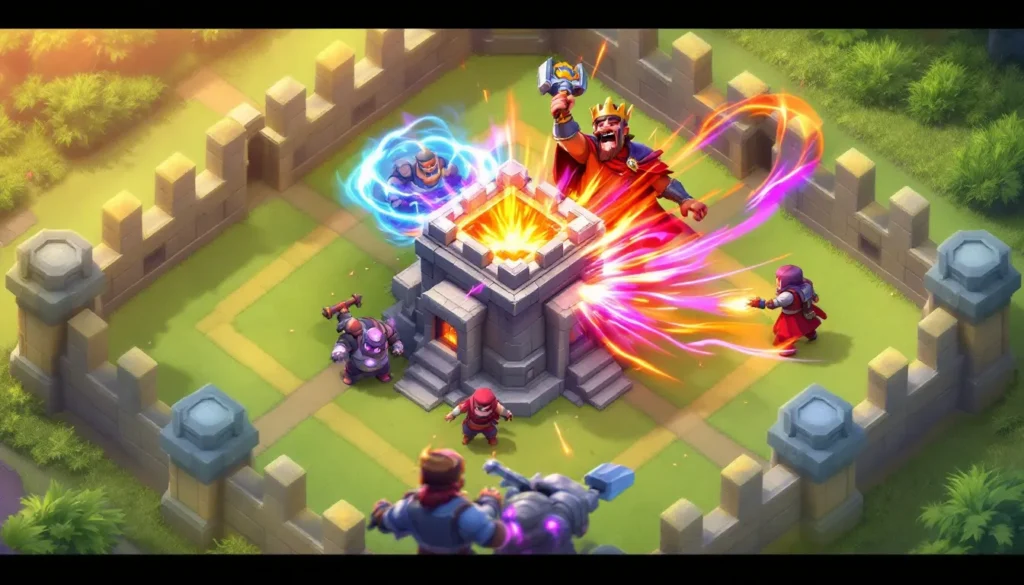
Red King is a legendary troop card that fills a unique niche between pure offensive firepower and tanky support. He’s a mid-sized unit with moderate health, solid damage output, and a mechanic that rewards proper placement. Unlike glass-cannon cards that need babysitting, Red King can hold his own in a push, though he’s not quite a tank in the vein of Golem or P.E.K.K.A.
The card works best in decks where you’re planning a deliberate, staged push rather than quick cycle strategies. He thrives when paired with support units that amplify his damage or protect his flanks. In the current meta, Red King occupies a middle ground, he’s not oppressive enough to dominate every matchup, but in the right deck with the right support, he becomes a nightmare to defend against.
What makes Red King interesting is his role flexibility. He can anchor a beatdown push, punish misplaced defenders, and apply steady pressure when supported properly. The key is recognizing which deck archetype suits your play style and mastering the timing windows where Red King generates maximum value.
Red King Stats and Abilities Explained
Elixir Cost and Card Rarity
Red King costs 8 elixir to deploy, placing him in the premium troop category. This high elixir investment means you’re committing significant resources to a single card, so mistakes are punished hard. His legendary rarity means he’ll need a handful of copies to max, but once leveled, he scales powerfully with ladder progression.
The 8-elixir threshold is important for deck building, it means your cycle must be tight enough that you’re not sitting at max elixir for extended periods, or you’ll face awkward situations where you can’t defend and can’t push simultaneously.
Attack Damage and Special Mechanics
Red King deals 290 damage per hit at level 13 (note: exact damage scales with card level, and balance changes in recent patches may have adjusted this figure). His attack speed is moderate, meaning he’s not a machine-gun unit but deals consistent, meaningful damage. His special mechanic is that each attack applies a temporary effect that can amplify subsequent hits or create tactical advantages, the exact details depend on your current version, so if you’re reading this, verify the current card description in-game.
What matters for strategy is that his damage profile makes him lethal against medium-health units and structures. A lone Red King vs. a lone Musketeer? Red King wins the trade. Against defenses like Inferno Dragon or Cannon, he needs support, or the engagement becomes unfavorable.
Movement Speed and Range
Red King moves at a medium pace, faster than Golem, slower than Hog Rider. His attack range is melee-oriented, meaning he needs to close distance to the target. This is both a strength (he can chase down units) and a weakness (he’s vulnerable while crossing the bridge if not protected).
The range mechanic means you must consider positioning carefully. Placing him too far back delays his contribution: placing him too aggressive exposes him to spell punish (like Fireball or Log). The sweet spot is often slightly behind your tank or support unit, allowing him to dish damage while the frontline absorbs hits.
Best Deck Archetypes Featuring Red King
Beatdown Decks with Red King
Beatdown is Red King’s natural home. Pair him with a true tank like Golem, Giant, or Lava Hound to create an nearly unstoppable push. Here’s the basic formula:
Core beatdown skeleton:
- Tank (Golem or Giant)
- Red King (your secondary damage dealer)
- Support spell (Rage or Arrows to clear swarm)
- Ground defense (Inferno Dragon, Mini P.E.K.K.A., or similar)
- Building (Furnace or X-Bow for chip)
- Defensive utility (Log, Zap, or Tesla)
The strategy is to build a slow, deliberate push that’s nearly impossible to stop once momentum builds. You’ll often pump elixir early, soak pressure with your defensive cards, then launch the push when your opponent has spent defensive elixir. Red King’s 8-elixir cost fits perfectly in the 15–20 elixir push phase of a beatdown game plan.
Beatdown with Red King tends to struggle against Inferno Dragon and heavy swarm, so your spell lineup must address these. Recent Clash Royale Top Decks often feature Golem-Red King cores for exactly this reason.
Cycle Decks and Mid-Ladder Strategies
Red King doesn’t naturally fit fast-cycle strategies because his 8-elixir cost breaks the speed-cycling rhythm. But, mid-ladder (5000–7000 trophies) sees plenty of “semi-cycle” decks that play with a 3.5–4.0 elixir average but include Red King as a mid-game finisher.
Think of it as a hybrid: you cycle and defend early, then when your opponent commits their anti-air or primary defense to the wrong lane, you slam Red King plus a support unit for a devastating counter-push. This archetype relies on opponent misplay more than beatdown but can work well against inexperienced players.
Mid-ladder Red King decks often run:
- Hog Rider or Goblin Gang for pressure
- Mini P.E.K.K.A. for defense
- Fireball for swing turns
- Red King as the finisher
The weakness is obvious: skilled players won’t feed you the counter-push opportunity. Still, for mid-ladder climbing, this can be effective.
Red King in Control and Defensive Setups
Control decks use heavy defensive tools to weather pressure, then convert defense into counter-pushes. Red King fits here as a counter-push threat, but he’s not the primary focus. You’re building value off your opponent’s attacks, then punishing with Red King plus leftover troops.
Example control framework:
- Building or splitter (Cannon, Tesla, or Building) for ground defense
- Inferno Dragon for air/tank threats
- Zap or Log for cycle
- Red King as the counter-push finisher
- Spell (Fireball, Poison, or Lightning) for support
Control Red King decks shine against beatdown because you’re grinding value off defensive trading, then Red King becomes an unstoppable threat on the counter-push. The downside is that you need solid card cycle to execute the defense-to-counter timing correctly. One mistimed defense, and your Red King can’t save you.
Red King Counters and Defensive Strategies
Cards That Counter Red King Effectively
Red King isn’t invincible. Certain cards create major problems for him:
Building-based counters:
- Inferno Dragon: The classic counter. If Red King walks into an active Inferno, he melts. The key is that Inferno punishes slow, linear pushes, exactly what Red King decks rely on.
- Inferno Tower: Similar to Inferno Dragon but stationary. Highly predictable, but forces Red King decks to carry a hard counter.
Spell-based punish:
- Lightning: Deals heavy damage and stuns, breaking a Red King push’s momentum.
- Poison: Locks Red King in place and deals chip damage over time. Not as effective as Lightning but still punishing.
Swarm-based denial:
- Skeleton Army or Goblin Gang: Cheap swarm units that can distract and damage Red King if left unchecked. Red King needs spell support to clear efficiently.
- Barbarians: Tanky swarm that outlasts Red King in a direct 1v1, especially if overleveled.
Unit-based counters:
- Mini P.E.K.K.A. (if equal or higher level): Deals massive DPS and can kite Red King around.
- Dragon: Splashes the Red King push while staying out of range.
The meta reality: Inferno Dragon and Inferno Tower remain Red King’s hardest counters. This is why beatdown Red King decks carry hard counters themselves (Lightning, Tornado, or Inferno Dragon on their side).
Positioning and Defense Techniques
Developing proper defensive habits is half the battle against Red King. Here are the positioning principles that matter:
1. Stack your defense wisely
Don’t plop your first defense directly on the Red King. Instead, place it slightly offset or staggered so Red King must path around it, buying time for reinforcements. A head-on collision is often the Red King player’s dream, they want a straight brawl.
2. Separate the push components
If Red King arrives with a tank, split your defense. Put anti-tank in one lane and anti-Red King in the other, forcing the opponent to choose which unit to protect. Inferno Dragon excels here because it threatens both tank and Red King.
3. Use kiting and separation
Place a unit far away from the push to draw aggro and kite Red King away from the main conflict. This “separation” technique forces Red King to chase, wasting time and eating more tower shots.
4. Time your spell resets
If you’re running Inferno, time your spell (Zap or reset mechanic) to avoid the opponent’s counters. They’ll often carry Lightning or Tornado to break Inferno. Stay unpredictable with your Inferno placement.
5. Counter-push aggressively
Don’t simply sit back and defend. Once you’ve blocked the Red King push, immediately counter-push in the other lane with your own pressure. This forces them to respond, breaking the momentum and applying back-pressure. Many Red King decks struggle with active defense, so make them work for every inch.
How to Use Red King in Different Arena Levels
Red King for Mid-Ladder Players
Mid-ladder (5000–7000 trophies) is where Red King shines brightest. Players here are skilled enough to execute basic strategies but often lack the tight defense and card interaction mastery of top ladder. This is where a well-built Red King beatdown can run over opponents.
Mid-ladder Red King strategy:
- Play defensively early, building up to a powerful Red King push around the 2-minute mark.
- Leverage card level advantages if you’re overleveled. Red King scales well with levels, so a level 11 Red King vs. level 9 defenses is a significant advantage.
- Don’t overthink it. Straight beatdown with tanky support is usually sufficient. Your opponents won’t have the skill or cards to stop a well-executed Golem + Red King push.
- Pay attention to spell rotation. If they use Fireball on your Furnace, they likely can’t spell-rotation your push. This is the opening to strike.
Mid-ladder is also where you’ll face the most varied decks. You might see Balloon, 3M, or other off-meta picks. Red King’s flexibility means you can usually adapt, but always identify your hardest matchups early and adjust your deck if needed.
Red King in Ladder and Competitive Play
High ladder (7000+ trophies) and competitive play (Challenges, Grands, Pro circuits) require fundamentally different Red King execution. Opponents here have maxed defenses, understand card interactions deeply, and punish greed instantly.
High ladder Red King approach:
- Red King is not your primary win condition. Instead, use him as a threat multiplier, a card that forces defensive responses, opening up other options.
- Positioning becomes critical. You can’t afford wasteful placements. Every Red King deployment must have a clear purpose: punish a defender, apply pressure in a specific matchup, or exploit an elixir advantage.
- Manage your hand rotation tightly. With 8-elixir commits, your cycle must ensure you’re never caught with an awkward hand.
- Meta shifts matter more. If the ladder meta is drowning in Inferno Dragons, Red King becomes significantly weaker. Conversely, if it’s Hog-heavy, Red King decks punish Hog players who don’t have proper counters.
- Consider niche Red King decks. Some top players run Red King in unusual slots (like as a defensive threat in control decks) that catch opponents off-guard.
The competitive landscape changes seasonally. During seasons where heavy beatdown is in favor, Red King excels. When the meta swings toward fast cycle or Mortar control, Red King becomes a risky pick. Stay flexible.
Red King Synergies and Supporting Cards
Spell Combinations That Maximize Damage
Spells are what turn a Red King push from “okay” into “oppressive.” Here’s how the top spell supports work:
Rage
Rage doubles the attack speed of Red King, making him a damage machine. A Raged Red King can shred through medium-health units and structures in seconds. The downside is Rage is expensive (2 elixir) and doesn’t help against swarm. Standard synergy: play Red King, then when he reaches the tower or primary defender, drop Rage.
Fireball
Fireball handles swarm, splitters, and unit clusters. If Red King is stalled by Skeleton Army or hitting Inferno while also being poked by ranged units, Fireball clears the swarm and lets Red King re-engage. This is a staple in most Red King beatdown decks.
Arrows
Less powerful than Fireball but cheaper (3 elixir). Good for cycling but also useful to clear bats, goblins, or range units before they lock onto Red King.
Tornado
Advanced synergy: Tornado can group defenders around Red King, letting him hit multiple units simultaneously. It also resets Inferno. Tornado combos demand precise timing but reward perfect execution.
Lightning
Offensive synergy: Lightning damages structures and units while stunning. On defense, it resets Inferno. Some Red King decks use Lightning as a catch-all threat.
The best spell pairing depends on your meta. Against swarm-heavy metas, Fireball is essential. Against Inferno mirrors, Tornado or Lightning becomes mandatory.
Troop Synergies and Push Building
Red King works best alongside:
Tanks (primary synergy):
- Golem: The classic. Golem soaks damage while Red King deals it. Together, they’re nearly unstoppable. Weakness: both are slow and vulnerable to Inferno.
- Giant: Cheaper than Golem (5 elixir) and faster. Synergy is solid but slightly weaker because Giant dies faster to Inferno.
- Lava Hound: For air beatdown. Hound applies pressure while Red King handles ground defense. Rare but viable.
Support units:
- Inferno Dragon: Punishes tanks and Inferno defenses. Pairs well with Red King to create a “full spectrum” threat.
- Mini P.E.K.K.A.: Swings defensive trading. If they defend with a high-health unit, Mini P.E.K.K.A. can kite and burst it down.
- Ewiz: Stuns and resets Inferno. Provides electrical support for the push.
Cycle units:
- Hog Rider: Applies side-lane pressure while Red King pushes the main lane. Opponent must choose which to defend.
- Goblins: Cheap cycle to keep your hand flowing between Golem + Red King commitments.
The deck building philosophy for Red King is synergy-first. Don’t just dump cards into a deck. Ask: “Does this unit make Red King better, or does it solve a specific matchup weakness?” Every slot matters at high levels.
A complete Red King push sequence often looks like:
- Golem at the back (6 elixir spent)
- Red King behind it (14 elixir spent)
- Hold Fireball for swarm response
- When the push reaches the tower, deploy Rage if defending is weak
- Follow up with Mini P.E.K.K.A. or Inferno Dragon if the primary threat is cleared
This staged push is hard to stop if your opponent’s elixir is low.
Common Mistakes Players Make With Red King
Even solid Clash Royale players make systematic errors with Red King. Recognizing and avoiding these separates competent players from strong ones.
Mistake 1: Deploying Red King reactively instead of proactively
Many players treat Red King like a “panic” card, they drop it when they’re losing on elixir or health. This almost always backfires. Red King needs setup. Proactive deployment (pushing when you have an elixir advantage or when the opponent has exhausted their counters) is infinitely more effective than reactive drops.
Mistake 2: No complementary tank
Red King on the map alone gets kited, surrounded, and neutralized. Beatdown Red King requires a tank. If you’re running Red King without a Golem or Giant, you’re not maximizing the card. Solo Red King works only in very specific control decks, and even then, it’s often suboptimal.
Mistake 3: Ignoring meta counters
If Inferno Dragon is everywhere and your Red King beatdown has no Inferno answer, you’re soft-locked into bad matchups. Adapt your deck or accept that Red King might not be the move this season. Flexibility is strength.
Mistake 4: Overcommitting without a counter-push escape
If you dump 15 elixir on a Red King push and it gets stopped, you’re vulnerable to a 15-elixir opponent counter-push. Skilled Red King players always hold defensive resources. Never go all-in unless you’re absolutely certain the push wins the game.
Mistake 5: Poor spell timing
Dropping Rage or Fireball too early or too late wastes the card’s value. Rage should activate when Red King is about to hit the primary threat. Fireball should clear swarm, not splash Random Knights on the side. Timing separates pros from casuals.
Mistake 6: Not accounting for level disadvantage
A level 9 Red King vs. level 11 defenses often loses. If you’re underleveled, Red King might not be your best card for climbing. Stick with units that can overcome level disadvantages (like Hog Rider or Golem) or pivot to cycle decks that rely less on card durability.
Mistake 7: Tunnel vision on the Red King push
You’re so focused on building your Red King offense that you ignore opponent pressure in the other lane. Red King decks need solid defense: otherwise, you’ll lose before your push ever matters. Keep active in both lanes.
Red King Tips and Tricks for Advanced Players
Once you’ve mastered the basics, these advanced techniques separate competent players from Red King experts.
Tip 1: The bait-and-switch
Deploy Red King in one lane, drawing defensive resources, then pivot your main push to the opposite lane. Skilled opponents will see this coming, but against passive players, it’s devastating. The key is selling the fake threat early: if you deploy Red King obviously early, they’ll scout it and prepare.
Tip 2: Elixir management and pump mind games
If you’re pumping, indicate it clearly (by defending and playing passively). When they commit to their push, stop pumping and slam Red King. The tempo swing from pump into Red King is powerful. They’re expecting you to defend lightly, but suddenly you’re pushing back.
Tip 3: Inferno tech selection
If you’re running Inferno Dragon in your Red King deck, sometimes position it NOT with the Red King. Instead, place Inferno defensively in the opposite lane, forcing the opponent to respond to it while Red King pushes alone. This splits their attention and can create chaos.
Tip 4: Spell rotation prediction
Pay attention to when your opponent uses Inferno reset spells. If they blow Zap on your bats early, they can’t reset your Inferno later. Track their spell rotation constantly. This micro-information wins tight matches.
Tip 5: Micro-positioning of Red King
Instead of dropping Red King dead-center, position him slightly left or right, making him walk at an angle toward the tower. This can cause kite units to chase awkwardly, giving you extra seconds of pressure. It sounds minor, but seconds matter in Clash Royale.
Tip 6: The “broken counter-push”
When defending against their push, leave Red King alive if possible. Use him to start a counter-push immediately after defending. Many players don’t expect a surviving Red King to be deployed on counter, so you catch them off-guard.
Tip 7: Tournament standard practice
If you’re grinding challenges or tournaments, practice Red King matchups extensively. Play against Inferno Dragon decks, Hog decks, and other meta threats repeatedly. Path of Legends gameplay at high levels demands this preparation.
Tip 8: Watch high-level Red King players
Review gameplay from top ladder and pro circuit Red King users. Watch their positioning, their spell timing, their deck choices across matchups. Even 10 minutes of study pays dividends. Resources like Game8 and Twinfinite have deck guides and meta analyses that break down Red King’s role.
Tip 9: Adapt your Red King deck mid-season
If you notice Inferno Dragon is dominating your meta region, swap out a defensive slot for a hard counter. If Balloon is suddenly popular, pivot your air defense. Red King decks need flexibility: the best players adjust weekly, not monthly.
Conclusion
Red King is a card that rewards understanding. He’s not brain-dead powerful, he requires thoughtful deck construction, precise timing, and solid fundamentals to execute. But when you nail the formula, pushing with Red King and smashing through defenses is genuinely satisfying.
The core takeaway: Red King works best in beatdown decks with strong tank synergy and complementary spells. Understand his counters (Inferno Dragon, swarm, Lightning), respect the meta, and adapt your builds as balance shifts. For mid-ladder, Red King is a surefire climber. For high ladder and competitive, he’s a viable but matchup-dependent choice.
Master his positioning, spell timing, and push transitions, and you’ll join the players who genuinely dominate with him. The card has room for growth depending on meta shifts, so stay tuned for balance changes and seasonal updates. Keep experimenting, keep grinding, and most importantly, don’t panic-drop Red King. Plan your pushes, execute with precision, and the towers will fall.


